
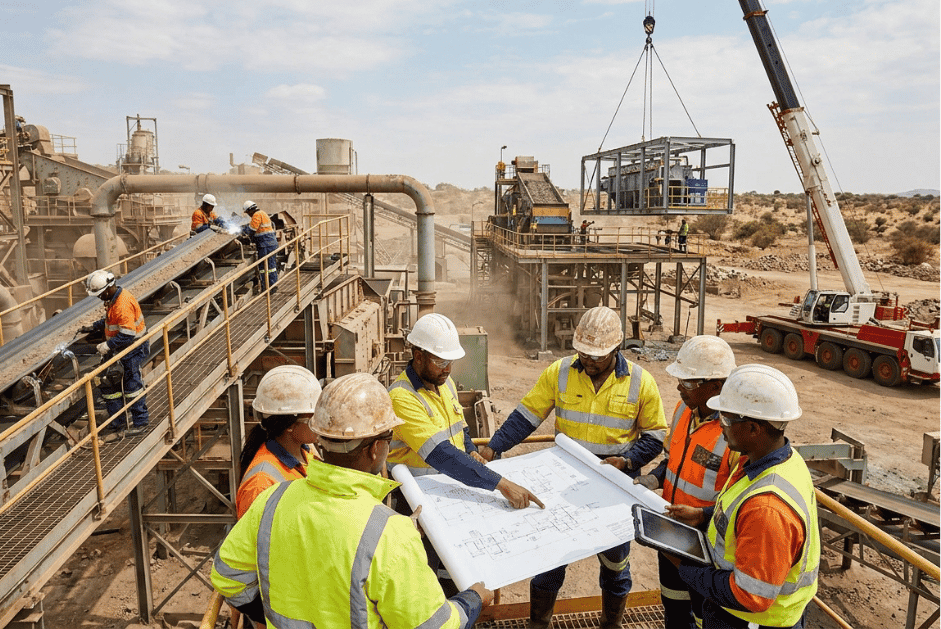
How to Reduce Downtime During Mining Plant Upgrades
Upgrading a beneficiation or mineral processing plant is one of the highest-stakes projects a mine can undertake. The objective is always to increase throughput, improve recovery, or replace aging assets—but the immediate cost is lost production during the shutdown.
Every hour the plant is offline eats directly into profitability. Therefore, reducing downtime is not just a scheduling preference; it is a critical financial imperative. As industry experts, CSS Engineering has identified that the secret to a seamless transition lies in three core pillars: meticulous pre-planning, strategic scheduling, and rigorous execution.
Pre-Planning and Engineering
The vast majority of downtime is saved months before the actual shutdown begins. The more work you can move off the critical path, the shorter the outage will be. This requires a deep understanding of how engineering design supports beneficiation plant upgrades.
Detailed Scope and Simulation
You cannot upgrade what you do not accurately measure. Relying on outdated 2D drawings often leads to catastrophic delays when new equipment clashes with existing steelwork. We strongly advocate mapping out the entire upgrade using digital twins and process simulations. Knowing exactly how 3D scanning improves mining plant design accuracy allows CSS Engineering to identify spatial bottlenecks and structural clashes in a virtual environment before a single torch touches physical assets.
Pre-Installation Work
The goal is to minimise the volume of work that must happen while the plant is off. Teams should complete as much structural steel erection, foundational concrete work, and electrical cabling as safely possible while the plant is fully operational.
Dry Runs and Modular Assembly
Modular execution is a game-changer. Instead of building a complex pump station or structural platform piece-by-piece inside a congested plant, we prefabricate and pre-assemble modular skids off-site. By testing these assemblies thoroughly before the final cutover window, installation becomes a matter of dropping a finished module into place and bolting it down.
Strategic and Data-Driven Scheduling
Even with perfect engineering, an upgrade will drag on if the schedule is chaotic. Data-driven scheduling ensures maximum labor efficiency.
Align with Major Outages
Never schedule a massive plant upgrade independently if you don't have to. Tie major upgrade cutovers to pre-existing scheduled shutdowns, routine maintenance windows, or naturally low-yield operational shifts. This overlaps production losses, effectively giving you "free" hours. This level of coordination relies on successfully designing spares and shutdown strategy well in advance.
Critical Path Management (CPM)
Not all tasks are created equal. CSS Engineering utilises strict Critical Path Method (CPM) scheduling to sequence high-risk tasks. By mapping the exact dependencies of the project, we ensure that specialized workforce teams and heavy-lift crane availability are perfectly optimized, preventing bottlenecks where one delayed task stalls the entire site.
Phased Cutover Strategies
Attempting to flip the switch on a massive, site-wide upgrade all at once leaves the operation highly vulnerable to teething issues. Instead, CSS Engineering champions a phased cutover approach. We upgrade interdependent systems—such as conveyors, crushers, and processing loops—section by section. This limits total system vulnerability and allows operators to stabilize one area before moving to the next.
Execution and Monitoring
When the shutdown finally begins, theoretical planning meets harsh reality. Avoiding plant design mistakes that increase downtime during this phase requires fierce oversight and rapid problem-solving.
Cross-Functional Workforce Integration
A siloed workforce causes delays. Successful upgrades require combining OEM specialists, internal maintenance crews, and external engineering contractors (like CSS Engineering) into unified shift teams. Establishing clear lines of communication ensures that when an unexpected challenge arises, the right expert is immediately available to resolve it.
Real-Time Progress Tracking
Whiteboards are not enough for modern upgrades. Site managers must actively monitor milestone progress using digital dashboards. Tracking progress in real-time allows leadership to catch micro-delays instantly and reallocate resources before a one-hour slip becomes a 12-hour delay.
Immediate Post-Commissioning Support
Downtime doesn’t officially end just because the switch is turned on; it ends when the plant reaches nameplate capacity. We ensure that vendor technical support, CSS engineering personnel, and critical spare parts remain on-site immediately following the restart to handle inevitable teething issues rapidly.
How CSS Engineering Delivers Tailored Plant Upgrades
Reducing downtime is an engineered outcome, not a happy accident. Whether you are debottlenecking a specific circuit or executing a comprehensive brownfield expansion, CSS Engineering provides end-to-end solutions. From initial 3D laser scanning to final commissioning, our mining process plant services in South Africa are specifically tailored to ensure your upgrade is executed safely, on time, and with absolute minimal disruption to your bottom line.
FAQs: Mining Plant Upgrades & Downtime
What is the most common cause of delays during plant upgrades?
The most common cause of downtime delays is inaccurate site data. Relying on outdated "as-built" drawings often leads to structural clashes where new equipment doesn't fit existing infrastructure. Using 3D scanning to create a digital twin eliminates these surprises.
What is a phased cutover in a mining plant?
A phased cutover involves upgrading and commissioning interdependent systems (like a single crushing circuit or conveyor loop) one section at a time, rather than shutting down and upgrading the entire plant simultaneously. This minimizes risk and reduces the overall impact on production.
How does modular assembly reduce shutdown time?
Modular assembly means fabricating and assembling large structural or mechanical components (like pump skids or control rooms) off-site. Because they arrive fully built and pre-tested, installation requires simple positioning and tie-ins, saving hundreds of labor hours on the critical path.
How can CSS Engineering help with my upcoming plant upgrade?
CSS Engineering offers comprehensive support including 3D scanning, structural engineering, modular fabrication, and strategic shutdown planning. We act as a seamless extension of your internal team to ensure meticulous pre-planning and flawless execution.
