
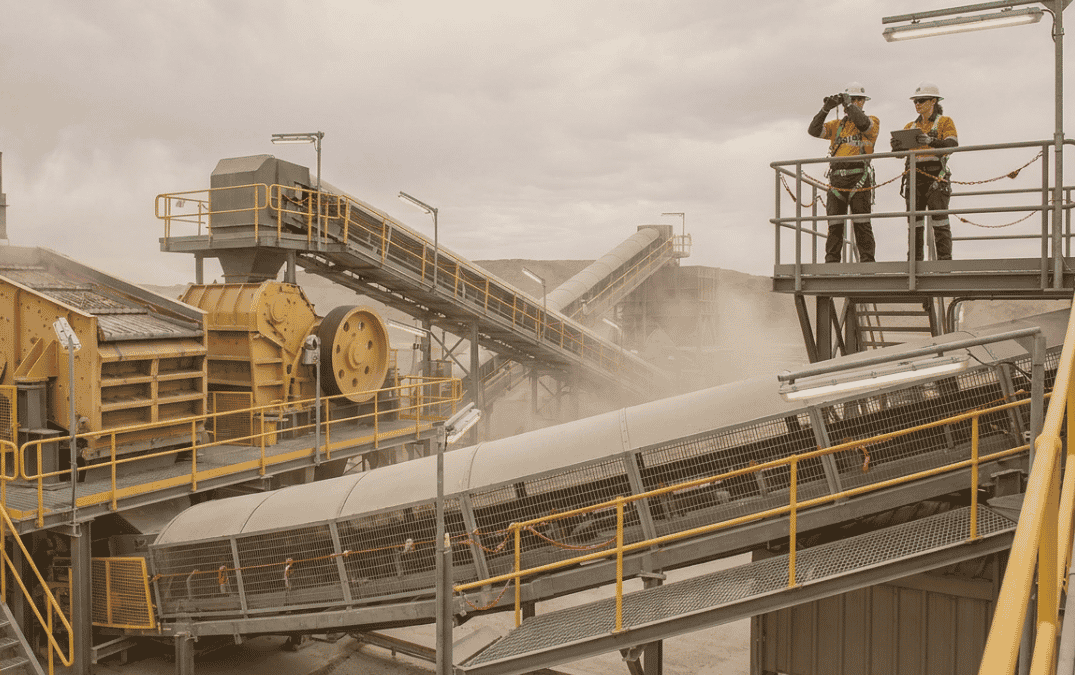
Crushers, vibrating screens and conveyors are essential to mineral processing, but they also contain moving components, elevated work areas, stored energy and restricted maintenance zones. Safer access around crushers, screens and conveyors therefore requires more than the installation of basic handrails or machine guards.
Effective access design must allow operators and maintenance teams to inspect, lubricate, clean, isolate and repair equipment without entering hazardous areas unnecessarily. This includes properly positioned platforms, walkways, stairs, guarding, emergency stops, isolation points, lighting and lifting provisions.
CSS Engineering helps mining and industrial clients evaluate these risks and develop practical access solutions that can be integrated into new process plants or retrofitted into existing operations. By combining engineering design, structural fabrication, plant layout planning and maintenance experience, access improvements can support both workforce safety and plant reliability.
Why Access Design Is a Critical Part of Plant Safety
Many access problems begin when equipment is positioned according to production flow alone. The crusher, screen or conveyor may fit within the available footprint, but insufficient consideration is given to how technicians will safely reach bearings, drives, chutes, tensioning systems or inspection points.
This can result in workers having to:
- Climb over equipment or structural steel.
- Reach through or around guarding.
- Work from ladders for extended periods.
- Stand close to moving belts or rotating components.
- Remove heavy guard panels without lifting assistance.
- Enter beneath chutes, counterweights or suspended material.
- Carry tools and components through narrow access routes.
These conditions can make routine maintenance slower and more dangerous. They can also encourage shortcuts when teams are under pressure to restore production.
A safer plant layout considers maintenance access during the engineering stage. Operators should be able to perform frequent inspections from protected areas, while technicians should have adequate space to isolate equipment, remove components and complete repairs.
1. Guarding Moving Components and Nip Points
Crushers, screens and conveyors contain numerous moving parts that can create entanglement, crushing, shearing and pinch-point hazards. These include pulleys, belt drives, rotating shafts, couplings, chains, sprockets, idlers, flywheels and counterweight systems.
Machine guarding should prevent accidental contact without making routine inspection and maintenance unnecessarily difficult.
Conveyor guarding
Conveyor guarding should address dangerous areas such as:
- Head, tail and snub pulleys.
- Drive assemblies and couplings.
- Belt take-up systems.
- Return idlers within accessible areas.
- Counterweights and gravity take-up arrangements.
- Transfer points and exposed belt edges.
- Areas where people may walk or work beneath moving components.
Guards should be sufficiently strong for the environment and securely fixed. Where removable sections are needed, they should be designed so they cannot be casually displaced during normal operation.
Inspection panels or access doors can allow selected checks to be completed without removing an entire guard assembly. However, these openings must not expose personnel to moving machinery.
Crusher and screen guarding
Crusher and vibrating screen installations may require guarding around drives, flywheels, belts, shafts, springs and other moving assemblies. Access should also be controlled around feed openings, discharge points and areas where material may be ejected.
The guarding arrangement must consider how maintenance personnel will access liners, bearings, motors, exciters and drive components once the plant has been isolated. A guard that prevents safe removal of a component can create a new maintenance risk.
CSS Engineering can evaluate the relationship between guarding, structural steel and maintenance requirements so that the final arrangement provides protection without obstructing essential work.
2. Engineering Safe Platforms, Walkways and Stairs
A well-designed access platform allows employees to reach inspection and maintenance points without climbing on equipment, balancing on structural members or relying on temporary ladders.
Crusher access platform design and conveyor walkway design should consider the work employees need to perform, the equipment they need to carry and the space required to remove components.
Platform positioning
Platforms should be positioned near regularly serviced components such as:
- Bearings and lubrication points.
- Electric motors and gearboxes.
- Belt tracking and tensioning systems.
- Screen drives and exciter assemblies.
- Crusher inspection points.
- Chute access doors.
- Sensors and instrumentation.
- Sampling and monitoring positions.
Access routes should avoid placing employees directly beneath suspended material, counterweights or potential spillage zones. Where this cannot be avoided, additional protective measures may be required.
Walkway requirements
Walkways should provide enough width for safe movement while carrying tools and maintenance equipment. Floor surfaces should offer suitable grip and allow water, mud and fine material to drain without creating slippery conditions.
Handrails, intermediate rails and toe boards can reduce the risk of falls and dropped objects. The design must also account for headroom, nearby pipework, structural bracing and conveyor components that may obstruct movement.
Stairs and access ladders
Where frequent access is required, stairs are generally more practical than vertical ladders. Stairs allow employees to carry equipment more safely and provide a more stable route during emergency evacuation.
Ladders may still be appropriate for infrequently accessed areas, but their location, landing area and relationship to surrounding machinery must be carefully assessed. Employees should not have to step directly from a ladder into an operating or restricted zone.
3. Designing for Safe Crusher and Screen Maintenance
Crusher and screen maintenance can involve heavy components, restricted working space and difficult lifting operations. Bearings, liners, motors, screen panels and drive components may all require removal during planned maintenance or emergency repairs.
Safe maintenance access therefore depends on more than a platform beside the machine.
Maintenance clearance
Adequate space should be provided for technicians to use tools, position lifting equipment and remove components. The access arrangement must consider the full removal path rather than only the space needed to reach the component.
A motor may be accessible for inspection, for example, but impossible to remove because a handrail, pipe or structural brace blocks the lifting route.
Lifting and handling provisions
Heavy maintenance tasks may require:
- Lifting beams.
- Monorails.
- Hoists.
- Davit systems.
- Certified lifting points.
- Removable handrail sections.
- Equipment laydown areas.
- Routes for forklifts or mobile cranes.
Including these provisions during the design stage can reduce manual handling and shorten shutdown work. It can also prevent teams from attaching lifting equipment to structures that were not designed for that purpose.
Screen maintenance access
Vibrating screens require access to decks, panels, springs, exciters and drive systems. The access structure must account for machine movement and should not interfere with vibration isolation.
Platforms connected incorrectly to vibrating equipment can transfer loads into surrounding structures or create fatigue problems. Structural and dynamic considerations must therefore form part of the screen access design.
4. Preventing Unsafe Chute and Blockage Clearing
Blocked chutes and transfer points are common causes of unplanned downtime. They can also expose employees to unstable material, stored energy and sudden releases when the blockage clears.
Access systems should be designed to minimise the need for employees to enter chutes, hoppers or restricted areas.
Possible engineering measures include:
- Appropriately positioned inspection doors.
- External rodding or clearing points.
- Washdown or flushing connections.
- Access platforms beside transfer points.
- Remote inspection cameras.
- Level and blockage detection sensors.
- Flow aids or mechanical clearing systems.
- Improved chute geometry and liner selection.
Inspection doors should be positioned so that employees are not standing directly in the potential discharge path of accumulated material. They should also allow the condition inside the chute to be assessed before the door is fully opened.
Where recurring blockages occur, the underlying cause should be investigated. Restricted chute angles, poor material flow, damaged liners, moisture changes or misaligned transfer points may need to be corrected rather than repeatedly cleared manually.
CSS Engineering can assess the layout and operation of transfer points as part of a broader mining process plant design or upgrade project.
5. Emergency Stops and Conveyor Pull-Cord Systems
Emergency stop systems allow personnel to stop equipment quickly when a dangerous condition develops. On long conveyors, emergency pull cords are commonly installed along accessible sections so that the conveyor can be stopped from multiple positions.
The emergency system should be easy to identify, accessible from the walkway and positioned so that employees do not need to move towards the hazard to activate it.
Access design should consider:
- Emergency pull-cord coverage along the conveyor.
- Clearly visible emergency stop stations.
- Access to controls from both sides where required.
- Indication of which device has been activated.
- Safe reset locations.
- Communication between field devices and the control system.
- Access for testing and planned inspection.
Emergency stops are an important protective measure, but they should not replace appropriate guarding, isolation or safe working procedures. Their purpose is to stop equipment during an abnormal or dangerous event.
Remote monitoring can further reduce unnecessary exposure. Cameras, sensors and condition-monitoring systems may allow operators to inspect selected areas without repeatedly entering close proximity to operating equipment.
6. Providing Accessible Isolation and Lockout Points
Maintenance cannot be performed safely unless the relevant energy sources can be isolated and secured.
Crushers, screens and conveyors may contain several forms of energy, including:
- Electrical power.
- Hydraulic pressure.
- Pneumatic pressure.
- Mechanical movement.
- Gravity and suspended loads.
- Stored energy in springs or tensioning systems.
- Material retained in chutes or hoppers.
Isolation points should be clearly identified and accessible from a safe standing position. Workers should not have to reach across moving equipment, climb behind machinery or enter restricted areas to apply a lock.
The access design should also provide enough space for personal locks, multi-lock devices and identification tags where these are required by the site’s lockout procedure.
A zero-energy condition must address more than the electrical supply. Conveyor counterweights, hydraulic accumulators, elevated components and trapped material may remain hazardous after the motor has been switched off.
Designers should therefore consider how stored energy will be released, restrained or verified before work begins.
7. Improving Lighting, Visibility and Housekeeping
Poor visibility can make otherwise acceptable access routes unsafe. Shadows around crushers, screens and conveyor structures can conceal steps, uneven surfaces, spilled material or damaged components.
Fixed lighting should provide suitable visibility at:
- Stairways and landings.
- Conveyor transfer points.
- Crusher and screen platforms.
- Isolation stations.
- Lubrication points.
- Inspection doors.
- Emergency stop stations.
- Areas used during shutdown maintenance.
Lighting fixtures should also be accessible for replacement and cleaning. A fitting positioned above equipment but impossible to reach safely will eventually become a maintenance problem of its own.
Housekeeping must also be considered in the access design. Spillage can accumulate on walkways, block stairs and create slipping hazards. Adequate drainage, toe-board arrangements, chute sealing and cleaning access can help keep routes usable.
8. Separating People from Falling and Spilled Material
Access routes around crushers and conveyors should not expose employees to falling rocks, loose components or material discharged from transfer points.
Where walkways pass beneath conveyors or elevated equipment, the design may require protective covers, spill trays, mesh panels or other barriers. Transfer points should be examined for uncontrolled spillage, dust release and material bounce.
The location of access platforms should also account for crusher discharge, screen oversize and areas where material could be ejected during abnormal operation.
Good plant layout places personnel outside these zones wherever possible. When complete separation is not practical, suitable protection should be incorporated into the structure.
9. Retrofitting Safer Access Into Existing Plants
Many mining plants were built in stages. New equipment may have been added around existing structures, resulting in narrow walkways, obstructed isolation points and limited maintenance clearance.
Retrofitting safer access around crushers, screens and conveyors requires an accurate understanding of the existing plant.
A typical upgrade process may include:
- Inspecting current access routes and maintenance activities.
- Recording structural steel, equipment, pipework and electrical installations.
- Identifying hazardous movement, fall and material-release zones.
- Reviewing shutdown tasks and component removal routes.
- Developing platform, guarding and structural modifications.
- Fabricating and installing the approved solution.
- Checking that the upgrade does not obstruct operations or future maintenance.
Three-dimensional site scanning can be valuable in congested plants because it captures the existing layout before new structures are designed. This supports more accurate clash detection and reduces the risk of fabrication changes during installation.
The topic can be linked naturally to CSS Engineering’s article, How 3D Scanning Improves Mining Plant Design Accuracy, which explains how accurate as-built information supports plant modification projects.
10. How CSS Engineering Supports Safer Plant Access
CSS Engineering provides an integrated engineering approach for mining and industrial process plants. Rather than treating guarding, platforms and maintenance access as separate items, the company can evaluate how they interact with the wider plant layout.
Support can include:
- Site inspections and access-risk assessments.
- Existing plant measurement and 3D scanning.
- Crusher, screen and conveyor layout improvements.
- Structural access-platform and walkway design.
- Stair, handrail and guarding design.
- Chute and transfer-point modifications.
- Maintenance and equipment-removal planning.
- Bespoke structural steel fabrication.
- On-site installation and modification.
- Planned preventative maintenance support.
- Engineering solutions for plant upgrades and shutdowns.
CSS Engineering’s structural and fabrication capabilities allow designed solutions to be converted into practical site installations. This is especially valuable when an access system must fit around existing machinery, pipework, cables and supporting steel.
For new facilities, access requirements can be incorporated into the overall process plant design. For existing operations, targeted modifications can address high-risk or maintenance-intensive areas without requiring a complete plant rebuild.
How CSS Engineering Helps Reduce Layout-Related Maintenance Costs
CSS Engineering supports mining and industrial clients with engineering design solutions that consider the full plant life cycle. The goal is not only to design a plant that operates correctly, but to design a plant that can be maintained safely, efficiently and cost-effectively.
This includes considering:
- Equipment positioning
- Maintenance access
- Process flow
- Material handling routes
- Walkways and platforms
- Service clearances
- Structural layout
- Utility routing
- Future expansion requirements
- Downtime reduction opportunities
By focusing on these areas during the design phase, CSS Engineering helps reduce the risk of layout-related maintenance problems once the plant is operational.
Good plant design is not only about fitting equipment into a space. It is about understanding how people, materials, machinery and maintenance teams will move through that space every day.
FAQs
What is required for safer access around crushers, screens and conveyors?
Safer access normally includes correctly positioned platforms, walkways, stairs, handrails, machine guarding, emergency stops, lighting and accessible isolation points. The design should allow routine inspection and maintenance without requiring employees to climb on equipment or enter dangerous operating zones.
Which conveyor components should be guarded?
Accessible pulleys, drive systems, couplings, shafts, chains, return idlers, take-up systems and counterweights may require guarding. Transfer points and belt edges should also be assessed where employees could come into contact with moving equipment or falling material.
Can safer access systems be added to an existing mining plant?
Yes. Existing crushers, screens and conveyors can be assessed and retrofitted with new platforms, stairs, walkways, guards and maintenance structures. Accurate site measurement or 3D scanning can help the new steelwork fit around existing machinery and services.
Why must isolation points be included in the access design?
Maintenance personnel must be able to isolate and lock equipment from a safe position. Poorly located isolation points can force employees to enter restricted areas or reach across machinery before the equipment has been made safe.
How can CSS Engineering improve crusher and conveyor access?
CSS Engineering can inspect the existing plant, identify access and maintenance constraints, develop structural and mechanical modifications, fabricate the required steelwork and support on-site installation. Solutions can be developed for individual problem areas or incorporated into a larger mining process plant upgrade.
