What Is a Mineral Beneficiation Plant, and How Does the Beneficiation Process Work?
In mining, extracting ore is only the first step. Most raw ore contains a mix of valuable minerals and unwanted material (gangue). A mineral beneficiation plant is the facility where that ore is upgraded so the valuable fraction is concentrated before further refining or smelting.
In simple terms:
Beneficiation = increasing mineral value by separating the wanted mineral from waste rock.
For operations focused on efficiency, recovery, and profitability, beneficiation is one of the most important steps in the mining value chain.
What Is a Mineral Beneficiation Plant?
A mineral beneficiation plant is an integrated processing facility that treats mined ore through a sequence of mechanical and physicochemical processes to:
Increase ore grade (concentration of valuable mineral)
Improve downstream process efficiency
Reduce transport and smelting costs per unit of metal
Maximize recovery of saleable product
Depending on the ore type and project goals, plants are designed with different circuit combinations — from simple crushing and screening setups to advanced multi-stage separation plants.
How the Beneficiation Process Works
While each commodity has its own route, most beneficiation plants follow a similar flow:
1) Comminution (Crushing and Grinding)
Run-of-mine ore is reduced in size to liberate mineral particles from waste rock.
Crushing: Primary/secondary crushers reduce large rocks
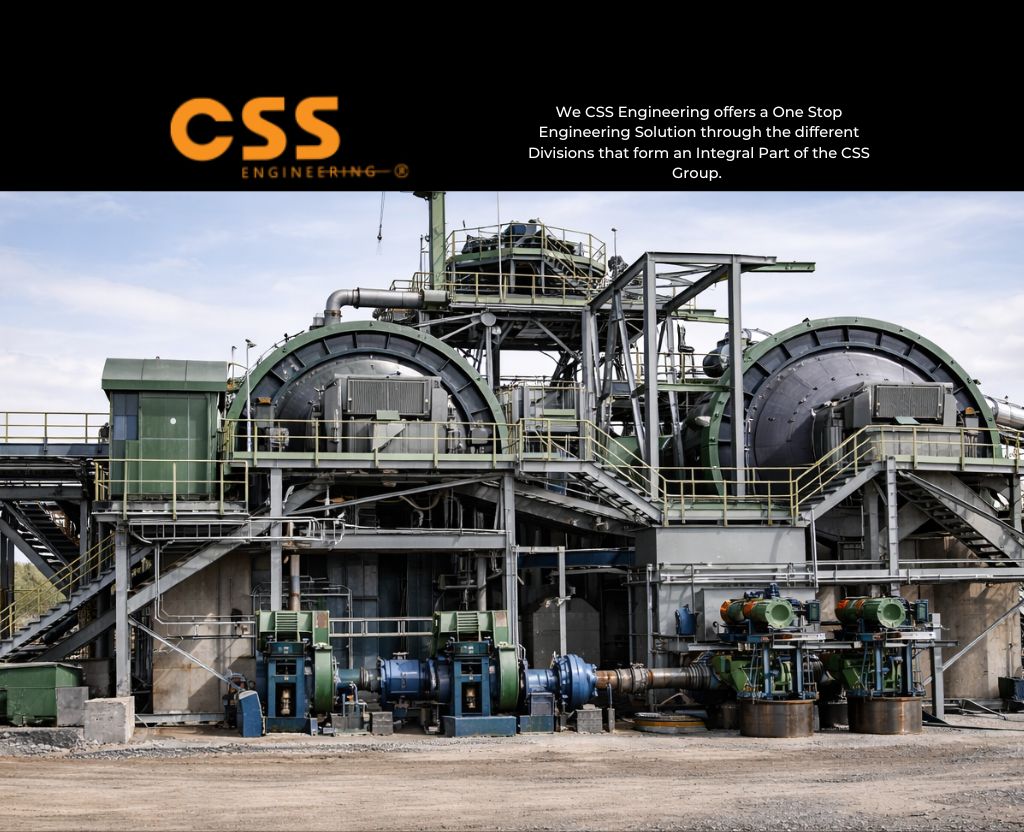
Grinding: Mills (e.g., ball mills, SAG mills) produce finer particles for separation
Why it matters: Liberation is critical. If minerals are still locked in gangue, separation efficiency drops.
2) Classification
Sized material is separated (often hydrocyclones/screens) so correctly sized particles move to the next stage, while oversized particles return for further grinding.
Why it matters: Keeps separation stages stable and improves overall circuit performance.
3) Separation / Concentration
This is where valuable minerals are separated from gangue using properties like density, magnetism, surface chemistry, or conductivity.
Common methods:
Gravity separation (density differences)
Magnetic separation (magnetic properties)
Flotation (surface chemistry differences)
Dense media separation (specific gravity differences)
Why it matters: This stage drives concentrate quality and recovery.
4) Dewatering
The concentrate and tailings are dewatered through thickeners, filters, and drying systems.
Why it matters: Reduces moisture for transport, handling, and downstream processing.
5) Tailings Handling and Water Recovery
Residual waste is routed to tailings systems, and water is often recycled back into the plant.
Why it matters: Supports environmental compliance and lowers water consumption.
Typical Outputs from a Beneficiation Plant
A well-designed plant generally produces:
Concentrate: higher-grade product for sale or smelting
Tailings: rejected waste stream requiring controlled disposal
Recovered process water: reused to reduce fresh-water demand
Why Beneficiation Is Critical for Mining Projects
A robust beneficiation strategy helps mines:
Increase revenue from lower-grade ore
Improve metal recovery
Lower operating costs in downstream stages
Extend life-of-mine by making more ore economically viable
Support sustainable operations through efficient water and waste management
Key Design Considerations for a Beneficiation Plant
For project success, design must align with ore characteristics and business objectives. Key factors include:
Ore mineralogy and variability
Target recovery vs concentrate grade trade-off
Throughput requirements
Water and energy constraints
Environmental and regulatory obligations
Maintainability and operational reliability
This is where process plant design expertise becomes essential — especially when scaling from concept through commissioning.
How CSS Engineering Adds Value
At CSS Engineering, beneficiation projects are approached with a practical, performance-driven mindset. From process flow development to detailed plant engineering support, the focus is always on:
Process efficiency
Equipment reliability
Reduced downtime risk
Long-term plant performance in demanding mining environments
Whether the requirement is new plant development, upgrade planning, or process optimization, a structured engineering approach can significantly improve recovery and operating outcomes.
Conclusion
A mineral beneficiation plant is the bridge between extracted ore and commercial value. By combining crushing, grinding, classification, separation, and dewatering in a controlled process, beneficiation transforms raw material into high-value concentrate.
If mining operations want stronger recovery, lower downstream costs, and better project economics, beneficiation is not optional — it is foundational. Beneficiation plant design in Gauteng
FAQs (5)
1) What is the main purpose of a mineral beneficiation plant?
To separate valuable minerals from waste material and increase ore grade before smelting or further refining.
2) Is beneficiation the same as smelting?
No. Beneficiation is a physical/physicochemical concentration step; smelting is a high-temperature extraction/refining step.
3) Which beneficiation method is best?
It depends on ore properties. Gravity, flotation, magnetic, and dense media methods are selected based on mineral characteristics and target product quality.
4) Why is grinding so important in beneficiation?
Grinding liberates valuable minerals from gangue. Poor liberation leads to poor separation and reduced recovery.
5) Can beneficiation improve low-grade ore economics?
Yes. Effective beneficiation can upgrade low-grade ore into a more valuable concentrate, improving overall project viability.
📍 Contact Us Today
📞 016 362 4152/3
📧 info@cssengineering.co.za
📍 34 Sieg Kuschke Ave, Meyerton